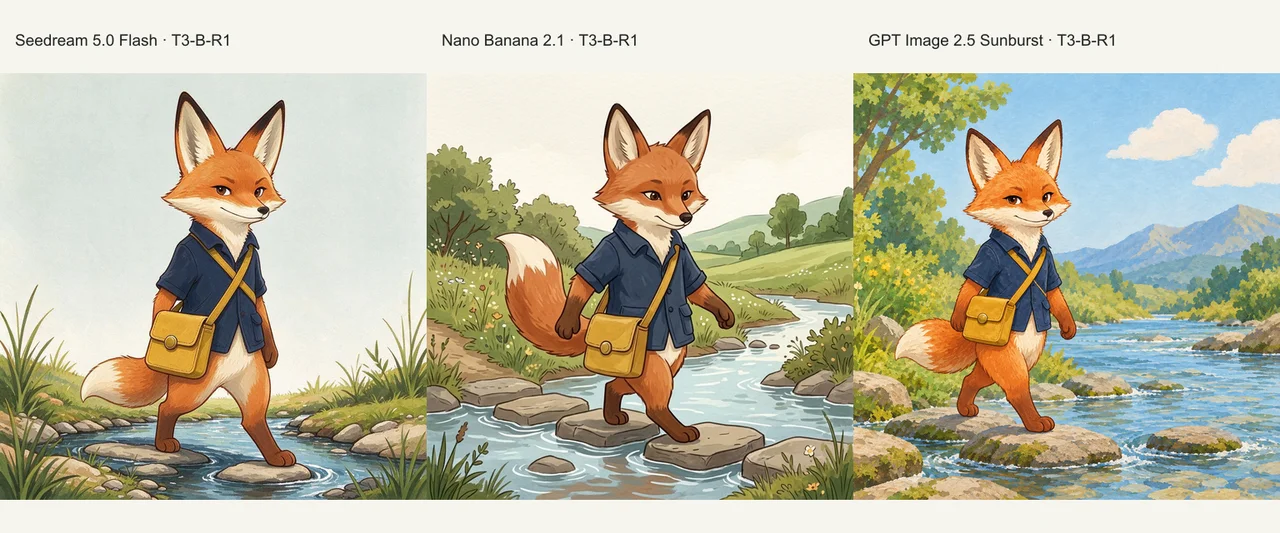
Same character, new shot: does a clearer reference prompt help?
11 fresh outputs test whether a more explicit reference instruction changes the camera view, action and composition—without losing the fox.
A longer instruction.
The same camera problem.
The added paragraph did not improve either scene’s primary result in this small test. Both versions kept the character, but neither achieved a strict front view. The stream layout already worked; hand–bag overlap still needed inspection.
Inspect the actual outputs ↓scored identity traits
Character identity and the requested shot are separate checks.
What actually changed?
| What the reader needs | Original reference instruction | Added reference-use instruction |
|---|---|---|
| Strict front-facing viewPrimary · head and torso face straight ahead | 0/3 | 0/2 |
| Stream action + left placement + right sceneryPrimary · all three must pass together | 3/3 | 3/3 |
| Stream visibility and hand–bag separationSecondary · all other stream items passed | 2/3 | 0/3 |
These are counts from one submitted human review—not a model ranking. All five walking outputs were rated partially front-facing (score 1), rather than fully front-facing (score 2).
Walking toward the camera.
What this tests: a straight front-facing head and torso at eye level, while the same character walks toward the viewer.
What to look for: nose, cheeks and shoulders facing straight ahead—not simply a readable walking gait. The pale stone path should establish the new scene.
Both conditions include the same reference image. Each output is a fresh, independent generation. Saved-result numbers are for reading order, not seed-matched pairs.
Original reference instruction
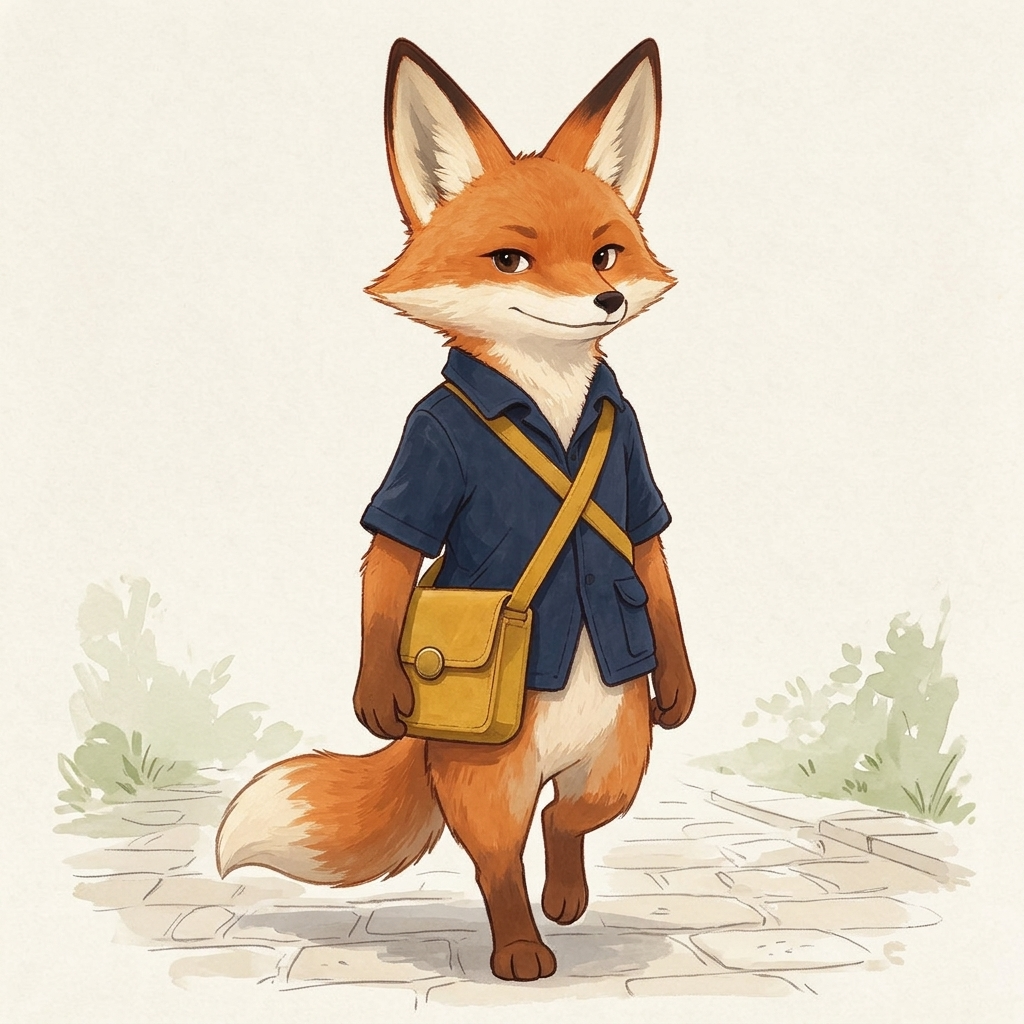
The nose, asymmetric cheeks and shoulder/chest angle retain a rightward turn. The pale paving occupies a small patch that fades into a largely empty backdrop.
Exact prompt, settings & human scores ↗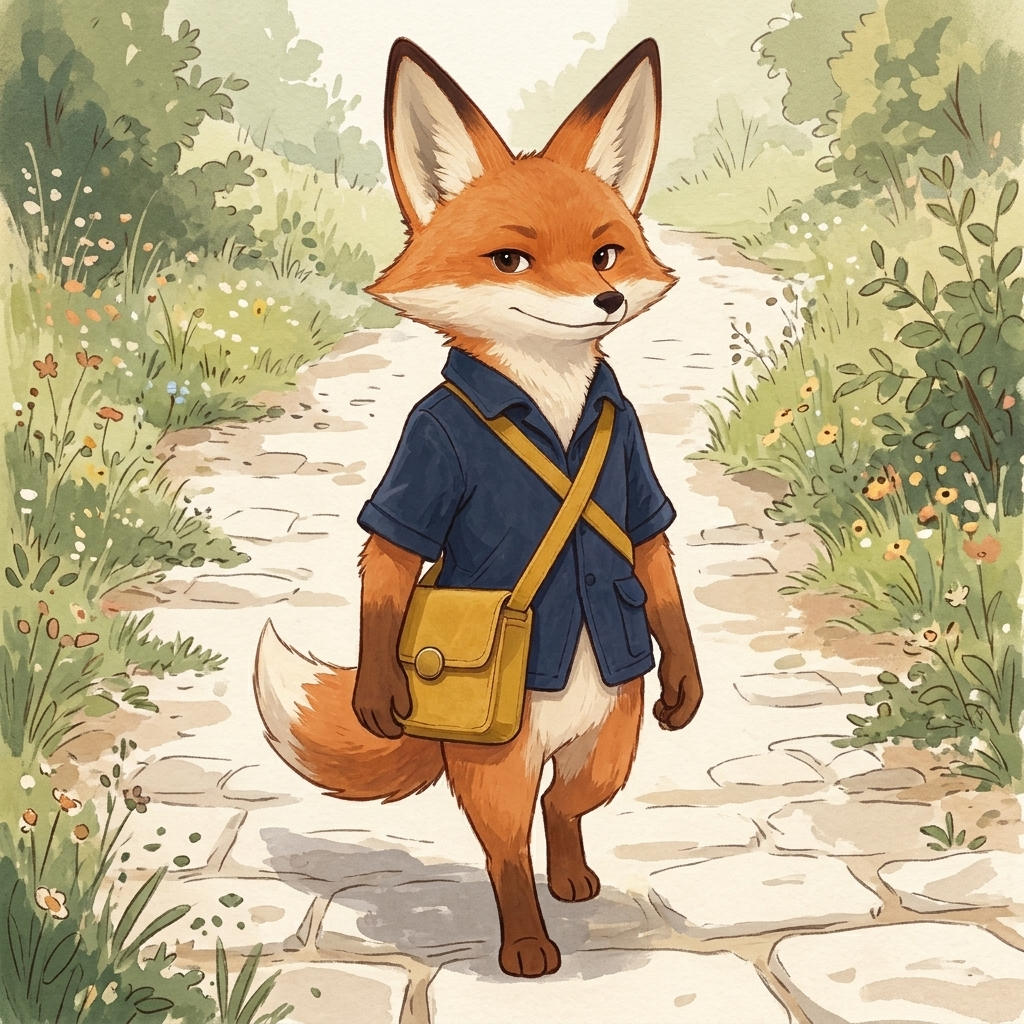
The nose, face and shoulders retain a slight three-quarter turn to the right.
Exact prompt, settings & human scores ↗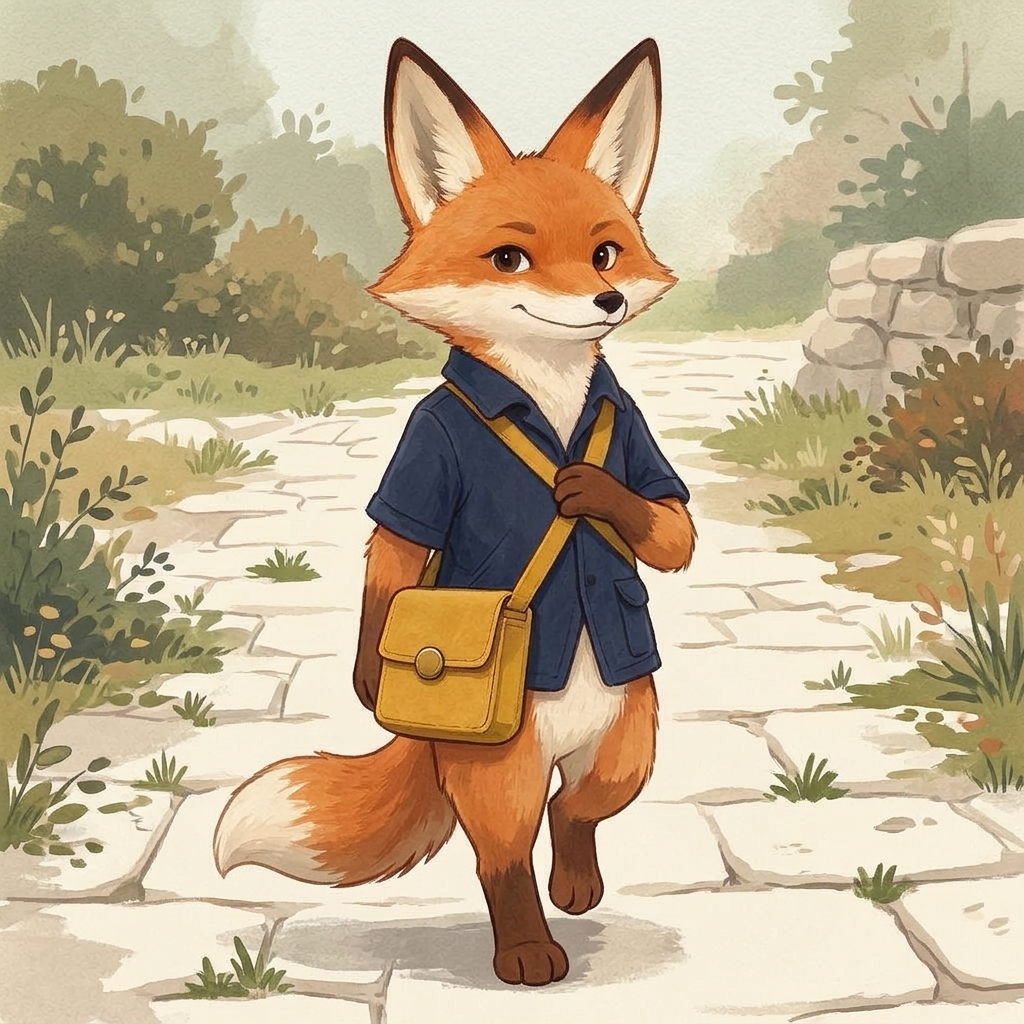
The muzzle points slightly right and the shoulders turn with it, rather than facing straight ahead.
Exact prompt, settings & human scores ↗Added reference-use instruction
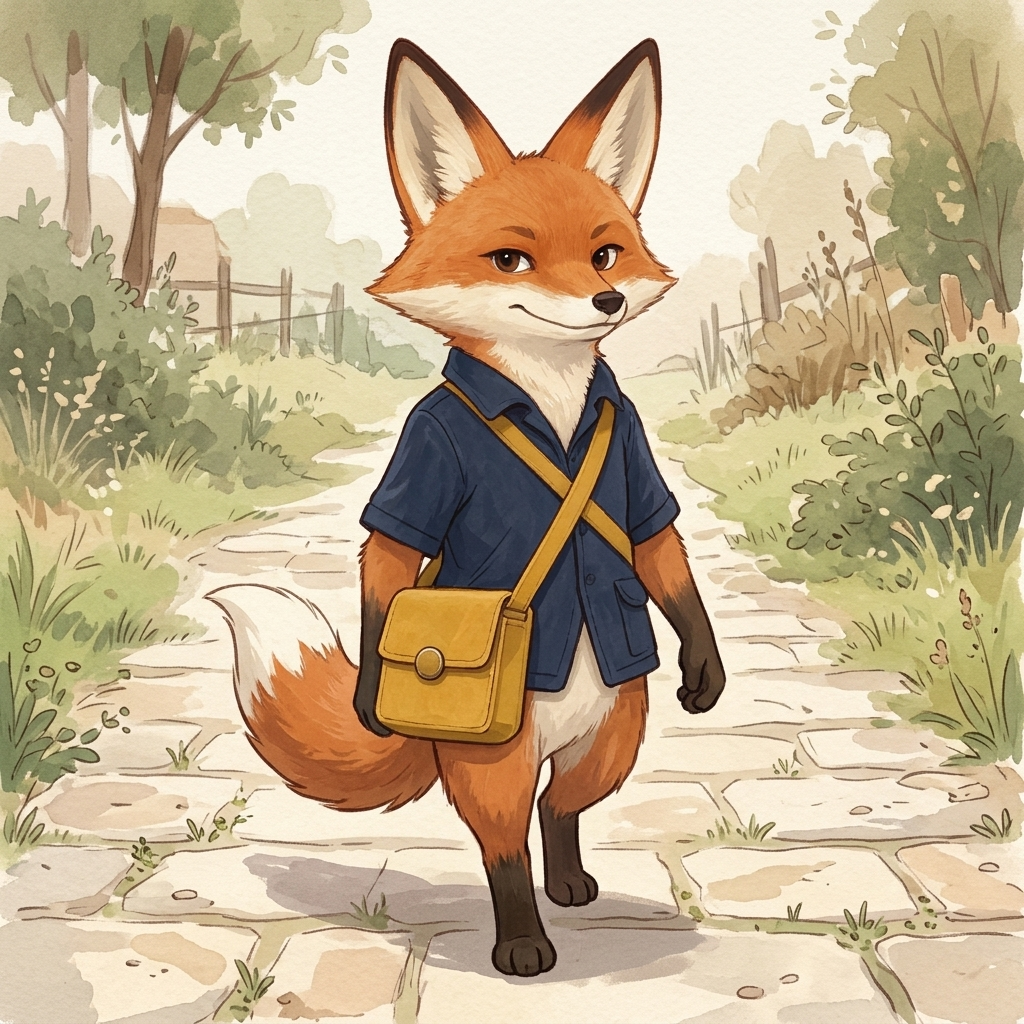
The face and shoulder/chest angle still turn slightly right.
Exact prompt, settings & human scores ↗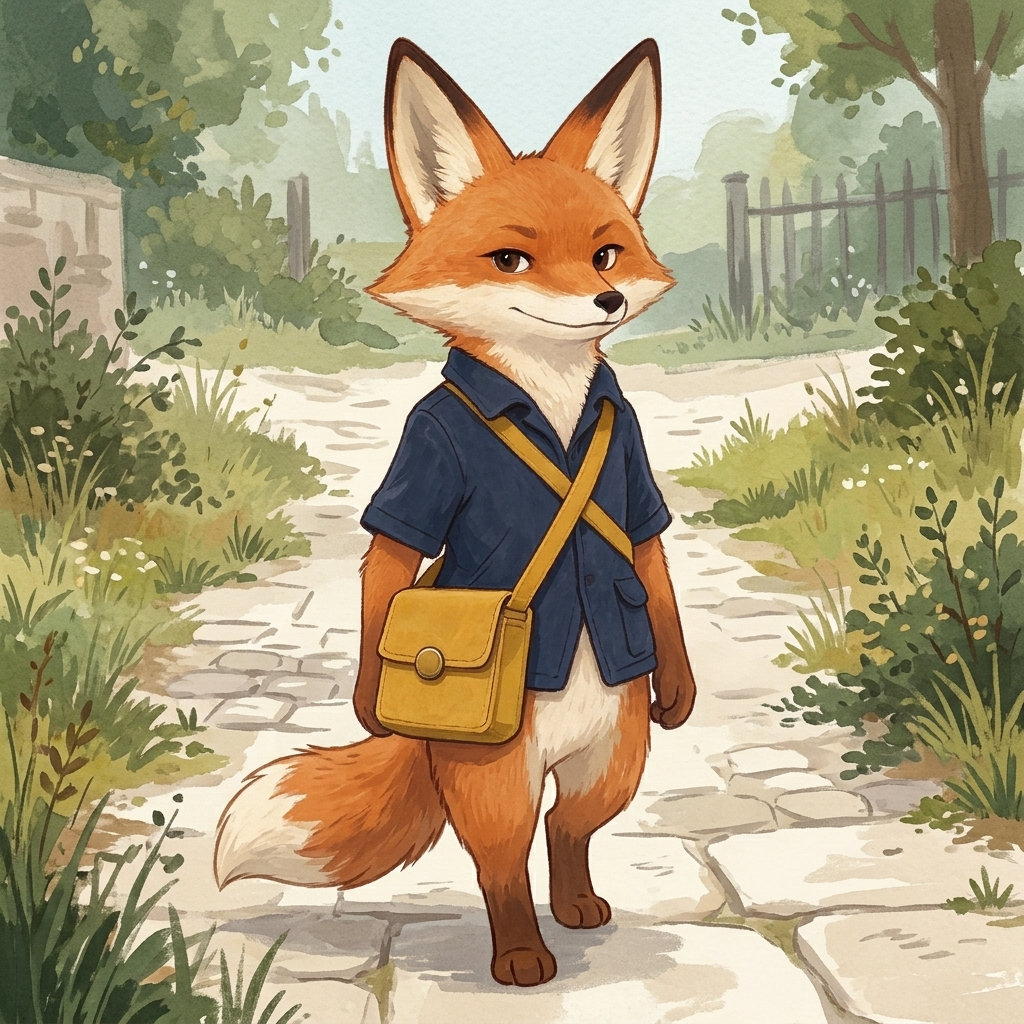
The face and chest still turn slightly right rather than directly toward the camera.
Exact prompt, settings & human scores ↗Walking forward did not mean facing straight ahead.
The reviewer marked all five views as partial: the nose, face and shoulder/chest angle retain a slight turn toward the image’s right. Walking action passed in every image. One original-instruction result also left the stone path as an isolated patch on a largely empty backdrop.
The more explicit reference-use paragraph did not fix the requested front view in the recovered samples. The missing third added-instruction output is excluded from the denominator.
Crossing the stream.
What this tests: a coherent step over flat stones, with the courier left of center and distinct scenery on the right.
What to look for: supporting limbs, left placement and a right-side scenery strip. Also check the separate instruction to keep the camera-facing bag clear of the hands.
Original reference instruction
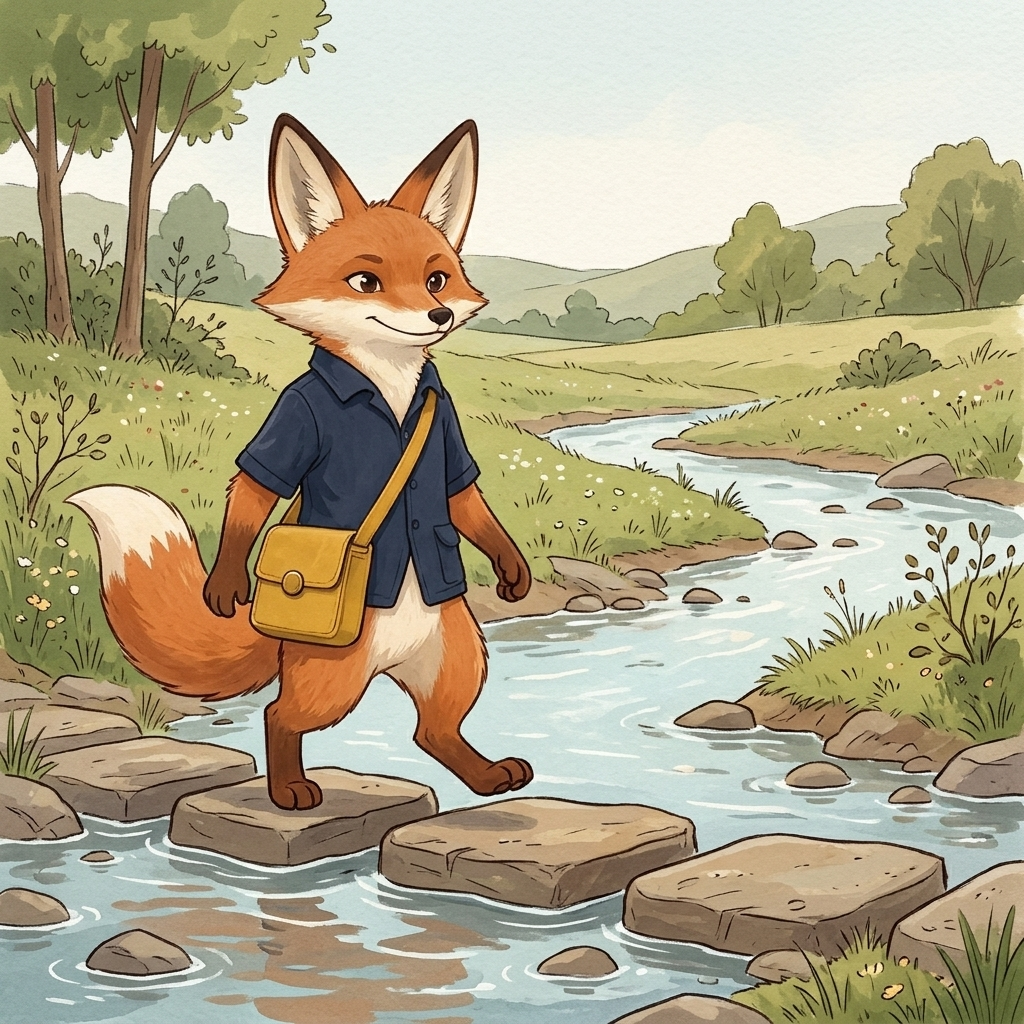
All identity and scene items were rated 2 in this result.
Exact prompt, settings & human scores ↗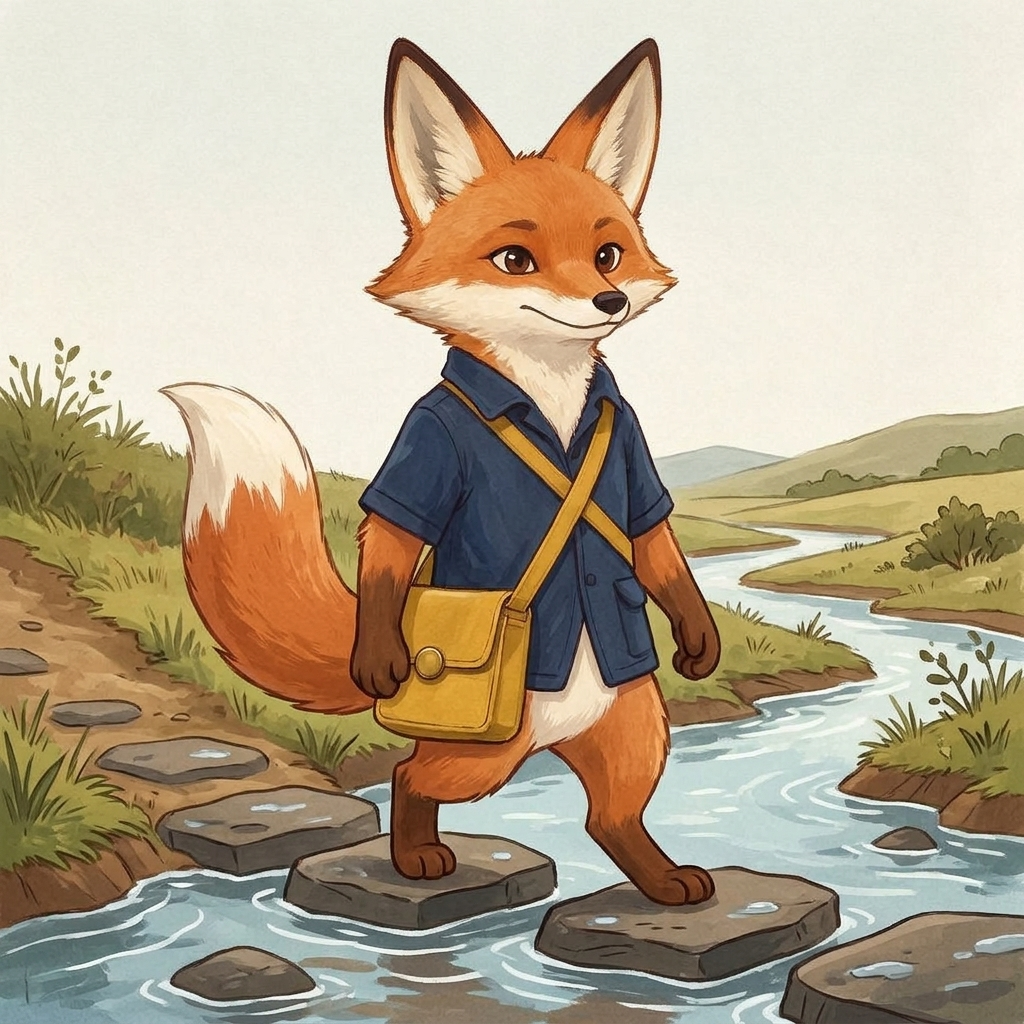
The hand overlaps the left flap edge and upper bag; the clasp and full figure remain visible.
Exact prompt, settings & human scores ↗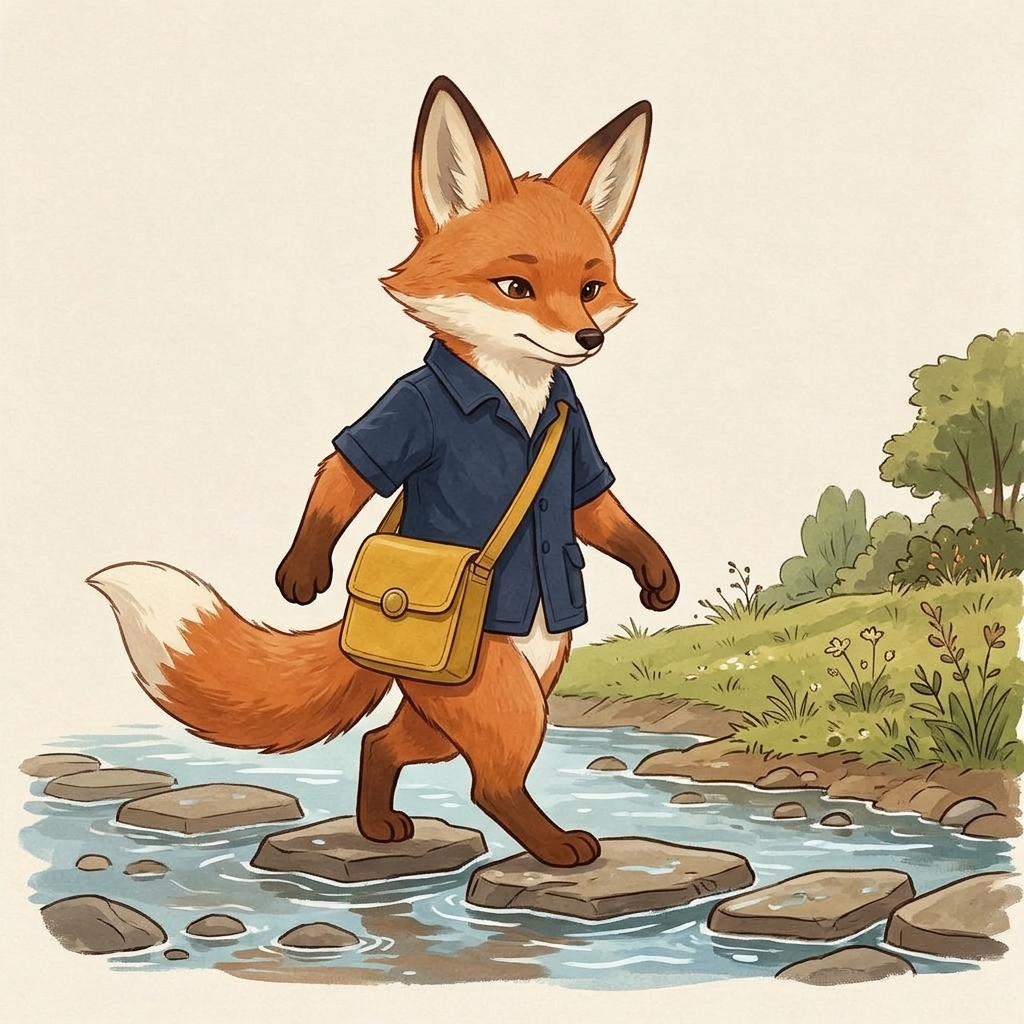
All identity and scene items were rated 2 in this result.
Exact prompt, settings & human scores ↗Added reference-use instruction
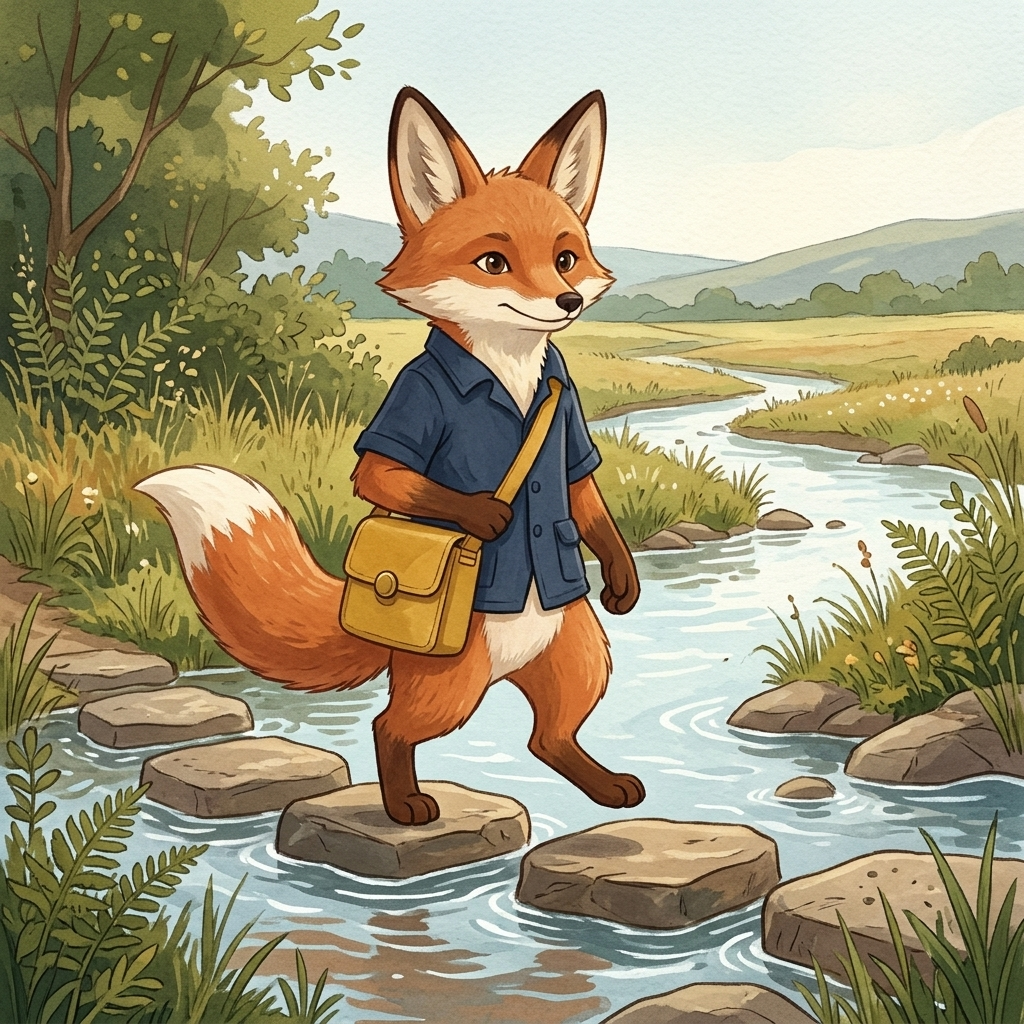
The raised forearm and hand overlap the bag top or strap connection; the clasp remains clear.
Exact prompt, settings & human scores ↗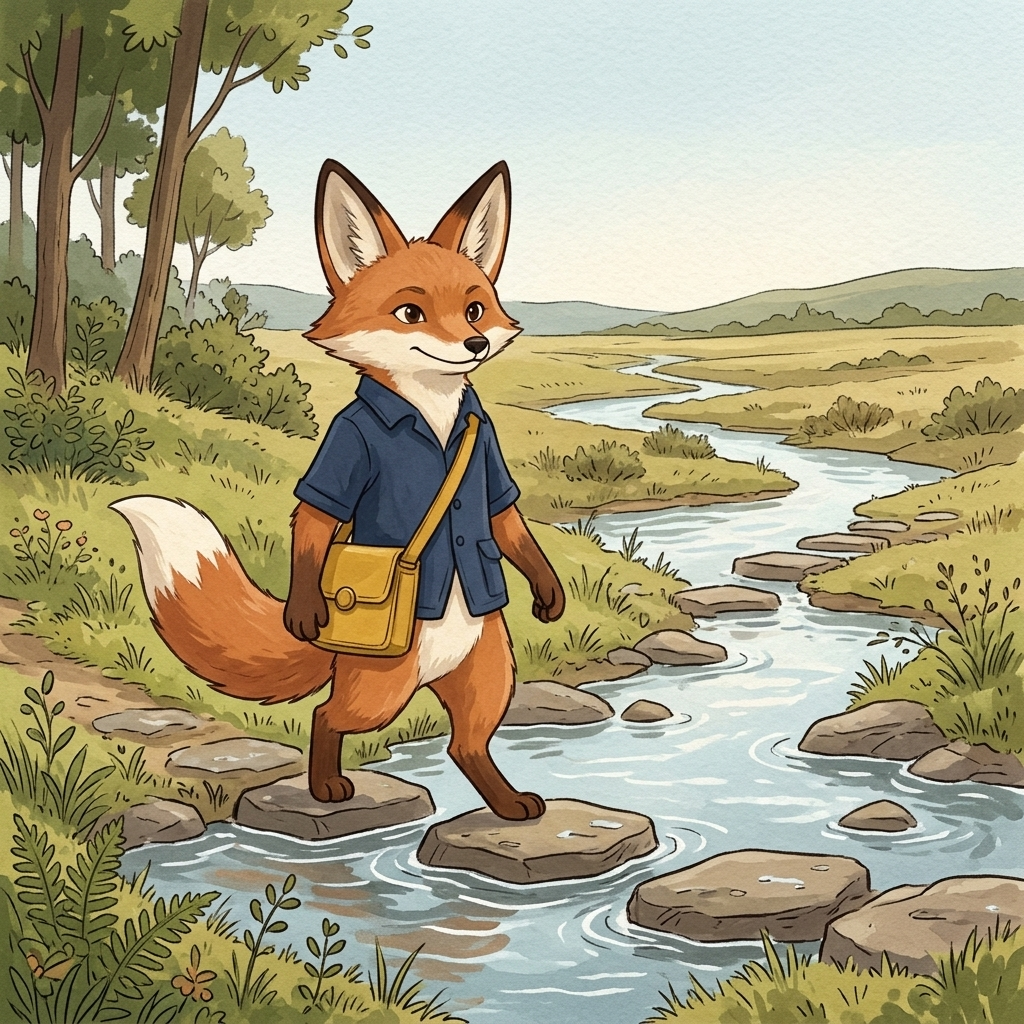
The hanging hand covers the left flap edge and part of the bag body.
Exact prompt, settings & human scores ↗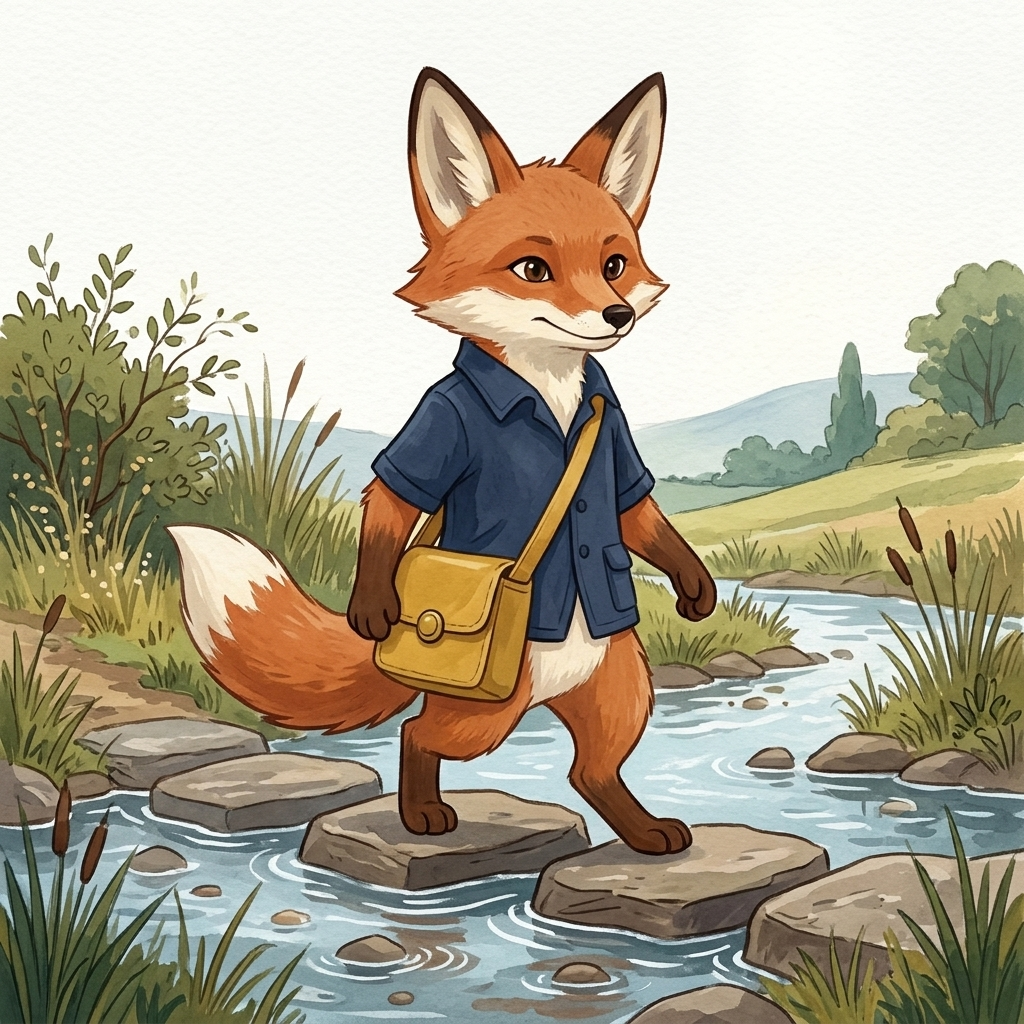
The hanging hand overlaps the flap edge and upper bag instead of staying clear of it.
Exact prompt, settings & human scores ↗The layout passed. The hand–bag relationship was the catch.
Both conditions passed the three-part primary endpoint in 3/3 images: stepping action, left placement and open scenery on the right all received 2/2. The three-quarter view, stream setting and daylight also passed throughout.
The secondary visibility requirement passed in 2/3 original-instruction images and 0/3 added-instruction images. In the partial results, hands or forearms overlap the flap, bag body or strap connection. A visible clasp can preserve the bag’s identity while its relationship to the arm misses the scene request.
This is an observed difference in six images, not evidence that longer prompts generally cause overlap.
Same reference. One added paragraph.
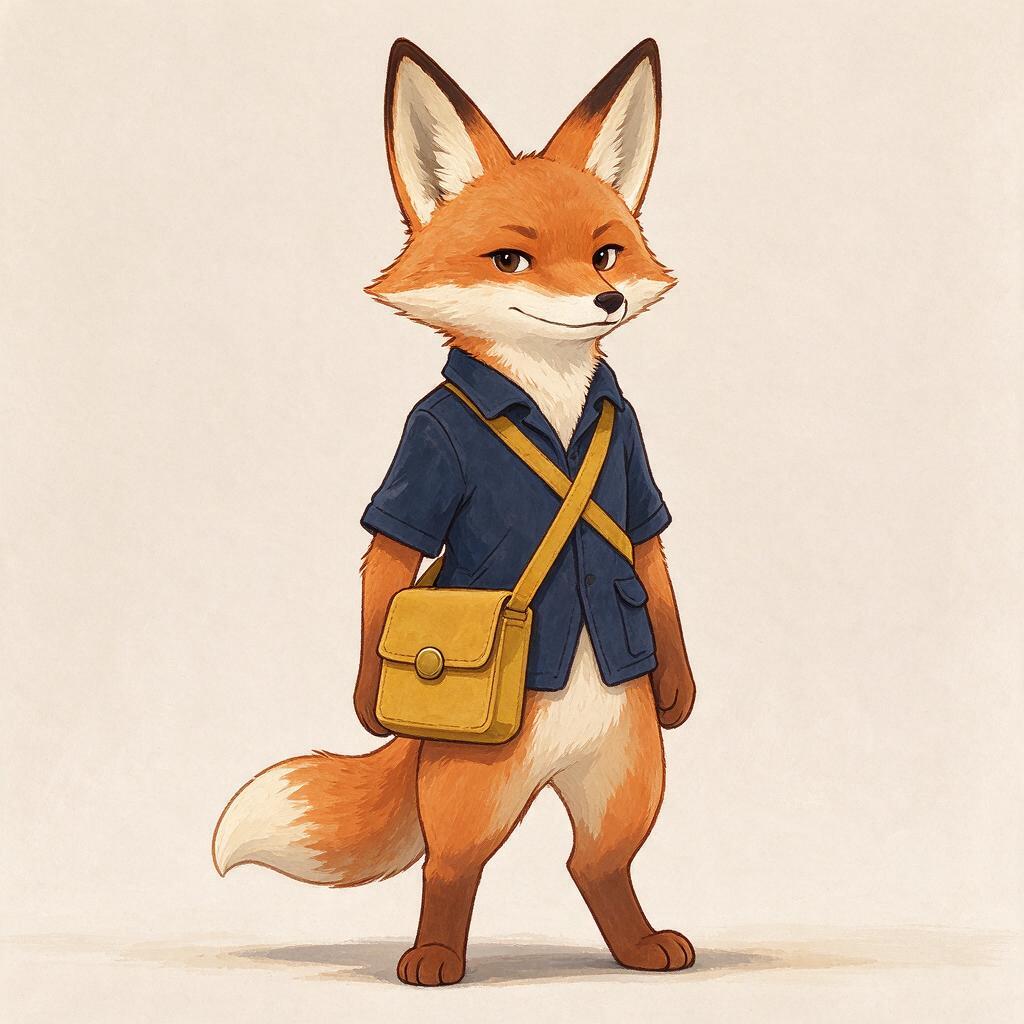
The original already restricted reference use.
It instructed the model to use the image for identity and illustration style, not as a fixed pose or background
. The second condition kept the full character and scene prompt unchanged, then added the paragraph below.
This tests extra specificity and repetition—not the first instruction to separate identity from pose. It also changes prompt length and the position of the final instruction. Because both conditions use the reference, this follow-up cannot isolate the reference image’s own causal influence on the shot.
Use the reference only to preserve the character's identity and illustration style. Do not copy its camera angle, pose, subject placement, framing, or background. Take the camera angle, pose, subject placement, framing, and background from the scene description, even when they differ from the reference.
Both versions used the same 1K square settings and common reference. The identity checklist stayed unchanged: compact body, large triangular ears, cream muzzle, terracotta fur, short navy jacket, square mustard bag and one round brass clasp. Every trait was rated 2 in every recovered image: 77/77 identity judgments.
Read all four exact prompts ↓Keep the short instruction.
Check the shot directly.
There is no observed reason here to prefer the added general paragraph in this workflow. Start with the original instruction, then check the head and torso angle, scene layout and hand–object relationship separately from identity.
A more targeted camera or object-separation instruction would be a new experiment. It is not a fix established by these results.
Before this test: compare the three-model, 48-image study ↗Small test. Visible evidence.
Two scenes × two prompt versions × three planned fresh generations. Eleven images were recovered: three per cell except two for the added-instruction walking condition. Two unresolved creation attempts concern the same missing planned image. Its 11 score rows remain blank; missing output is not scored as a visual failure.
One human reviewer completed all 133 assessable items, with condition labels concealed in the review interface, and reported not knowing the assignments. That statement is self-reported; no independent multi-reviewer blind study is claimed. The submitted CSV was frozen and hashed before assignment labels were joined.
Generation used the model label nano-banana-2-1 through Kie, at 1K / 1:1 / PNG with native quality defaults. All recovered originals are 1024 × 1024. Seeds were not documented and the service snapshot was not independently verified. Generation interruptions, small cells and the specificity/length/repetition confound limit the conclusion to this test.
Scoring criteria and all 133 human judgments
Scores mean 2: basically consistent / fulfilled; 1: partial; 0: missing or clearly different. Identity may use NA only when unobservable; none were used. Strict identity requires all seven traits to score 2.
The prespecified walking endpoint is strict front view. The stream endpoint requires stepping action, left placement and open right scenery all to score 2. Stream visibility is reported separately as a secondary item; it does not redefine the primary endpoint.
Left placement uses the full courier/bag/tail bounding-box center left of image midpoint; open right scenery requires an unoccupied strip at least one-quarter of image width. Read the frozen rubric ↗
All four exact prompts and the literal change
The baseline texts are unchanged from the original requests. Only the displayed reference-use paragraph is appended, after a blank line. Old outputs are not used as concurrent controls.
Literal prompt diff ↗Walking toward the camera
Original reference instruction
Use the attached approved fox courier image as the identity and illustration-style reference, not as a fixed pose or background. Preserve that same character while following the new scene below. The character is a fictional fox courier with a compact body, oversized triangular ears, a cream muzzle, and a terracotta coat of fur. The courier wears a short navy jacket and carries a square mustard-yellow shoulder bag with exactly one round brass clasp. Use flat gouache shapes, restrained paper texture, and clear outlines. Make one image with one courier only. Do not include lettering, extra accessories, or a collage. Keep the full body, ears, muzzle, jacket, bag, and clasp visible and large enough to inspect. Show the courier walking toward the camera on a quiet pale stone path in daylight, seen from the front at eye level. Keep the shoulder bag in front of the torso or at the visible side, with its clasp facing the viewer. Leave a clear margin around the full figure.Download exact prompt ↓
Added reference-use instruction
Use the attached approved fox courier image as the identity and illustration-style reference, not as a fixed pose or background. Preserve that same character while following the new scene below. The character is a fictional fox courier with a compact body, oversized triangular ears, a cream muzzle, and a terracotta coat of fur. The courier wears a short navy jacket and carries a square mustard-yellow shoulder bag with exactly one round brass clasp. Use flat gouache shapes, restrained paper texture, and clear outlines. Make one image with one courier only. Do not include lettering, extra accessories, or a collage. Keep the full body, ears, muzzle, jacket, bag, and clasp visible and large enough to inspect. Show the courier walking toward the camera on a quiet pale stone path in daylight, seen from the front at eye level. Keep the shoulder bag in front of the torso or at the visible side, with its clasp facing the viewer. Leave a clear margin around the full figure.

Use the reference only to preserve the character's identity and illustration style. Do not copy its camera angle, pose, subject placement, framing, or background. Take the camera angle, pose, subject placement, framing, and background from the scene description, even when they differ from the reference.
Download exact prompt ↓
Crossing the stream
Original reference instruction
Use the attached approved fox courier image as the identity and illustration-style reference, not as a fixed pose or background. Preserve that same character while following the new scene below. The character is a fictional fox courier with a compact body, oversized triangular ears, a cream muzzle, and a terracotta coat of fur. The courier wears a short navy jacket and carries a square mustard-yellow shoulder bag with exactly one round brass clasp. Use flat gouache shapes, restrained paper texture, and clear outlines. Make one image with one courier only. Do not include lettering, extra accessories, or a collage. Keep the full body, ears, muzzle, jacket, bag, and clasp visible and large enough to inspect. Show the courier stepping across a shallow stream on flat stones in daylight, viewed from a front three-quarter angle at eye level. Place the courier left of center with open scenery on the right. Keep the bag hanging on the camera-facing side, away from the hands, so the clasp remains visible. Leave a clear margin around the full figure.Download exact prompt ↓
Added reference-use instruction
Use the attached approved fox courier image as the identity and illustration-style reference, not as a fixed pose or background. Preserve that same character while following the new scene below. The character is a fictional fox courier with a compact body, oversized triangular ears, a cream muzzle, and a terracotta coat of fur. The courier wears a short navy jacket and carries a square mustard-yellow shoulder bag with exactly one round brass clasp. Use flat gouache shapes, restrained paper texture, and clear outlines. Make one image with one courier only. Do not include lettering, extra accessories, or a collage. Keep the full body, ears, muzzle, jacket, bag, and clasp visible and large enough to inspect. Show the courier stepping across a shallow stream on flat stones in daylight, viewed from a front three-quarter angle at eye level. Place the courier left of center with open scenery on the right. Keep the bag hanging on the camera-facing side, away from the hands, so the clasp remains visible. Leave a clear margin around the full figure.

Use the reference only to preserve the character's identity and illustration style. Do not copy its camera angle, pose, subject placement, framing, or background. Take the camera angle, pose, subject placement, framing, and background from the scene description, even when they differ from the reference.
Download exact prompt ↓
Capture details, file integrity and source trail
Each image’s public record provides exact prompt text, selected generation settings, UTC capture time, native dimensions, SHA-256 and human item scores. Native originals are unchanged; responsive WebP previews are separate display derivatives. All successful outputs are included.
The private source CSV hash is a816495da87042aa3742a1b2d71be7b471cad12df5ca520bcd90b8a8d44c06a6. Public score downloads omit reviewer identity and local paths while preserving original score values and notes. Raw provider responses, task identifiers and actual bills remain offline; no channel charge is presented as a manufacturer’s official price.
Sources: Generation API specification ↗ · Task record schema ↗. These document the controls; the saved outputs and submitted human sheet support the findings.